
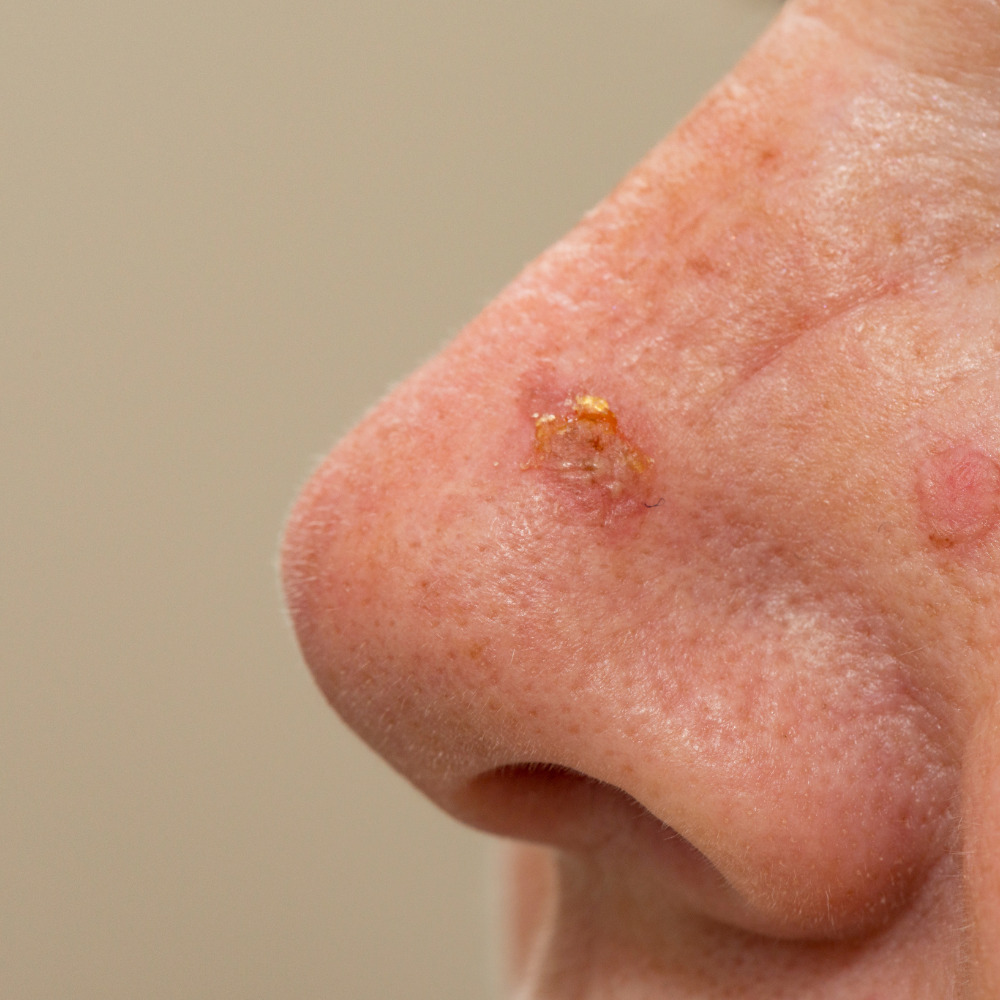
Expert Skin Cancer Screening for Accurate Early Diagnosis
Skin cancer is the most common form of cancer in the United States, with more cases diagnosed each year than all other cancers combined. The good news is that when detected early, skin cancer is also one of the most treatable forms of cancer, with cure rates exceeding 95 percent for many types. At Glo Dermatology in Parma, Ohio, Dr. Shaza Daoud provides thorough, professional skin cancer screenings to help patients throughout Greater Cleveland protect their health through early detection.
A skin cancer screening is a simple, painless examination that could save your life. During this comprehensive evaluation, Dr. Daoud carefully examines your entire skin surface to identify any suspicious growths, spots, or changes that may indicate skin cancer or pre-cancerous conditions. Whether you’re at high risk due to family history or sun exposure, have noticed something concerning on your skin, or simply want the peace of mind that comes from regular screenings, Glo Dermatology is here to provide the expert care you need.
Why Skin Cancer Screening Matters
Early detection is the key to successful skin cancer treatment. When skin cancer is caught in its earliest stages, before it has a chance to grow deeper or spread to other parts of the body, treatment is typically straightforward and highly effective. However, when skin cancer goes undetected and advances, treatment becomes more complex, and outcomes can be significantly worse—particularly for melanoma, which can be life-threatening if not caught early.
The challenge is that skin cancer doesn’t always announce itself with obvious symptoms. Early skin cancers may look like harmless spots, pimples, or minor skin irritations. Without training in recognizing the subtle signs of skin cancer, it’s easy to overlook or dismiss a potentially dangerous growth. Professional screenings by a certified dermatologist like Dr. Daoud significantly improve the chances of catching skin cancer when it’s most treatable.
Regular screenings are especially important because you can develop skin cancer even if you’ve always been careful about sun protection. While sun exposure is the primary risk factor, skin cancer can occur on any part of the body, including areas that rarely see the sun. Having a baseline examination and follow-up screenings allows Dr. Daoud to track changes in your skin over time and identify new or evolving growths that may need attention.
Types of Skin Cancer
Understanding the different types of skin cancer helps you recognize potential warning signs and appreciate why screening is so important.
Basal Cell Carcinoma
Basal cell carcinoma (BCC) is the most common type of skin cancer, accounting for approximately 80 percent of all skin cancer cases. It develops in the basal cells, which are found in the deepest layer of the epidermis (the skin’s outer layer). BCC most often appears on sun-exposed areas like the face, neck, and arms, though it can occur anywhere on the body.
Basal cell carcinoma typically grows slowly and rarely spreads to other parts of the body. However, if left untreated, it can grow into surrounding tissues, causing significant local damage. BCC may appear as a pearly or waxy bump, a flat, flesh-colored or brown scar-like lesion, a pink growth with a raised border, or a sore that bleeds, oozes, crusts, and doesn’t heal.
Squamous Cell Carcinoma
Squamous cell carcinoma (SCC) is the second most common type of skin cancer, developing in the squamous cells that make up the middle and outer layers of the skin. Like BCC, it most commonly occurs on sun-exposed areas, though it can develop anywhere, including inside the mouth and on the genitals.
Squamous cell carcinoma is generally more aggressive than basal cell carcinoma and has a higher risk of spreading to lymph nodes and other parts of the body, particularly if left untreated. SCC may appear as a firm, red nodule, a flat lesion with a scaly or crusted surface, a new sore or raised area on an old scar, a rough, scaly patch on the lip, or a red sore or rough patch inside the mouth.
Melanoma
Melanoma is the most serious type of skin cancer, accounting for the majority of skin cancer deaths despite representing only about 1 percent of cases. It develops in the melanocytes, the cells that produce melanin (the pigment that gives skin its color). Melanoma can develop in an existing mole or appear as a new dark spot on the skin.
What makes melanoma so dangerous is its ability to spread rapidly to other organs if not detected and treated early. When caught before it spreads, melanoma has an excellent prognosis—the five-year survival rate for localized melanoma is over 99 percent. However, once melanoma spreads to distant organs, the survival rate drops dramatically. This is why early detection through regular screenings is so critical.
Melanoma can appear anywhere on the body, including areas that don’t receive sun exposure. In men, it most commonly appears on the trunk (chest and back). In women, it more often develops on the legs. Melanoma typically appears as a new spot or an existing mole that changes in size, shape, or color. The ABCDE criteria (Asymmetry, Border irregularity, Color variation, Diameter greater than 6mm, and Evolution) help identify potentially problematic growths.
Other Skin Cancers
Less common types of skin cancer include Merkel cell carcinoma, a rare but aggressive cancer that appears as painless nodules on sun-exposed skin, and various types of cutaneous lymphoma. These cancers are uncommon but underscore the importance of professional skin examination.
What Happens During a Skin Cancer Screening
A skin cancer screening at Glo Dermatology is a comprehensive, head-to-toe examination of your skin. The process is simple, painless, and typically takes about 15 to 30 minutes.
Before your examination, you’ll be asked to remove your clothing and put on a medical gown. This allows Dr. Daoud to examine your entire skin surface thoroughly. If you’re uncomfortable with a full-body examination, you can discuss your concerns with Dr. Daoud, and she’ll work with you to ensure you’re as comfortable as possible while still conducting an effective screening.
During the examination, Dr. Daoud will systematically examine your skin from head to toe, including your scalp, face, ears, neck, chest, abdomen, back, arms, hands, legs, feet, and the areas between your fingers and toes. She’ll also check less obvious areas like behind your ears, under your arms, and the soles of your feet. If you have specific spots you’re concerned about, be sure to point them out.
Dr. Daoud may use dermoscopy during your examination. This technique uses a specialized handheld device that magnifies the skin and allows visualization of structures beneath the surface that aren’t visible to the naked eye. Dermoscopy significantly improves the accuracy of skin cancer detection and helps distinguish benign growths from potentially cancerous ones.
If Dr. Daoud identifies any suspicious spots, she’ll discuss her findings with you and recommend appropriate next steps. This may include monitoring the spot with periodic examinations, performing a biopsy (removing a small sample of tissue for laboratory analysis), or immediate treatment if indicated.
Who Should Get Screened
The American Academy of Dermatology recommends that everyone perform regular self-examinations of their skin and see a dermatologist if they notice any suspicious changes. However, certain individuals face higher skin cancer risk and should prioritize regular professional screenings.
You may be at increased risk for skin cancer if you have fair skin that burns easily and doesn’t tan well, light-colored eyes (blue, green, or gray), naturally red or blonde hair, a history of sunburns, especially blistering sunburns in childhood, a history of excessive sun exposure or tanning bed use, many moles (more than 50) or atypical moles, a personal history of skin cancer or pre-cancerous lesions, a family history of skin cancer, especially melanoma, a weakened immune system due to illness or medication, or a history of radiation therapy.
Even if you don’t have obvious risk factors, anyone can develop skin cancer. If you’ve never had a professional skin examination, consider scheduling a baseline screening. If you notice any new, changing, or unusual spots on your skin, don’t wait—schedule an appointment for evaluation.
How Often Should You Be Screened
The recommended frequency of skin cancer screenings depends on your individual risk factors and skin cancer history.
For most adults without significant risk factors, an annual skin cancer screening is a reasonable approach. This allows Dr. Daoud to establish a baseline understanding of your skin and identify any changes that develop over time.
If you have elevated risk factors—such as a personal or family history of skin cancer, numerous or atypical moles, or a history of significant sun exposure—more frequent screenings may be recommended. Some high-risk patients benefit from screenings every three to six months.
If you’ve been treated for skin cancer in the past, regular follow-up examinations are essential. Skin cancer can recur, and people who’ve had one skin cancer are at increased risk of developing additional skin cancers. Dr. Daoud will recommend an appropriate follow-up schedule based on the type and stage of your previous skin cancer.
Between professional screenings, monthly self-examinations help you stay aware of changes in your skin. Knowing what’s normal for your body makes it easier to notice when something new or different appears.
What to Do Before Your Screening
To get the most out of your skin cancer screening, a little preparation helps.
Remove nail polish from your fingernails and toenails before your appointment. Skin cancer can develop under the nails, and polish makes it difficult to examine these areas properly.
Wear your hair loose or in a style that allows easy examination of your scalp. If you have thick or dark hair, let Dr. Daoud know so she can take extra care examining your scalp.
Don’t wear makeup to your appointment, or be prepared to remove it. Makeup can conceal skin abnormalities that need to be evaluated.
Make note of any spots that concern you so you can point them out during your examination. It can be helpful to take photos of concerning spots beforehand so you can show Dr. Daoud any changes you’ve observed.
Come prepared to discuss your medical history, including any previous skin cancers or pre-cancerous lesions, family history of skin cancer, medications you take, and your history of sun exposure and tanning bed use.
Self-Examination: Your First Line of Defense
While professional screenings are essential, monthly self-examinations serve as your first line of defense against skin cancer. By regularly examining your own skin, you become familiar with what’s normal for your body and can spot changes or new growths that warrant professional evaluation.
To perform a thorough self-exam, you’ll need a full-length mirror, a hand mirror, good lighting, and about 10 to 15 minutes. Examine your entire body systematically, including the front and back of your body, both sides, your arms (including underarms), hands (including palms, fingers, and between fingers), legs, feet (including soles, toes, and between toes), and your scalp, face, and neck.
Use the ABCDE criteria to evaluate moles and spots. Look for Asymmetry (one half doesn’t match the other), Border irregularity (edges are ragged or blurred), Color variation (multiple colors within the same spot), Diameter larger than 6 millimeters (about the size of a pencil eraser), and Evolution (changes in size, shape, color, or new symptoms like itching or bleeding).
Also watch for the “ugly duckling” sign—a mole or spot that looks different from others on your body. Any new, changing, or unusual spot should be evaluated by a dermatologist.
Prevention: Reducing Your Skin Cancer Risk
While screening catches skin cancer early, prevention can help you avoid developing it in the first place. Since ultraviolet (UV) radiation from the sun and tanning beds is the primary cause of skin cancer, protecting your skin from UV exposure is the most important preventive measure you can take.
Apply broad-spectrum sunscreen with SPF 30 or higher every day, even on cloudy days and during winter months. Reapply every two hours when outdoors, and more frequently if swimming or sweating. Don’t forget often-missed areas like the ears, back of the neck, tops of the feet, and the part in your hair.
Seek shade when possible, especially during peak sun hours between 10 a.m. and 4 p.m. when UV rays are strongest. Wear protective clothing, including long sleeves, pants, wide-brimmed hats, and UV-blocking sunglasses. Consider clothing with built-in UPF (ultraviolet protection factor) for extended outdoor activities.
Avoid tanning beds entirely. Indoor tanning significantly increases your risk of all types of skin cancer, including melanoma. There is no such thing as a safe tan—any change in skin color from UV exposure indicates skin damage.
Check the UV index before spending time outdoors and take extra precautions when it’s high. Be especially careful around water, sand, and snow, which reflect UV rays and increase exposure.
Schedule Your Skin Cancer Screening Today
Skin cancer screening is one of the most important things you can do to protect your health. A simple examination could detect a potentially life-threatening cancer at its earliest, most treatable stage. Don’t put it off—schedule your screening with Dr. Shaza Daoud at Glo Dermatology today.
Contact our Parma office at (216) 351-7700 to book your appointment. We welcome patients from throughout Greater Cleveland and Northeast Ohio, including Parma Heights, Brooklyn, Seven Hills, Independence, Middleburg Heights, and surrounding communities.
Your skin health is too important to ignore. Take action today—your future self will thank you.
Frequently Asked Questions About Skin Cancer Screening
Does skin cancer screening hurt?
No, skin cancer screening is completely painless. It’s a visual examination of your skin—there are no needles, blood draws, or uncomfortable procedures involved. If a biopsy is needed, local anesthesia is used to ensure comfort.
What should I wear to my screening?
Wear loose, comfortable clothing that’s easy to change in and out of. You’ll be given a medical gown for the examination. Remove nail polish beforehand, and come without makeup if possible.
How long does a skin cancer screening take?
A comprehensive skin cancer screening typically takes 15 to 30 minutes. The length may vary depending on how many spots need close examination and whether any biopsies are performed.
Will my insurance cover skin cancer screening?
Many insurance plans cover preventive skin cancer screenings, though coverage varies. We recommend contacting your insurance provider to verify your coverage. Even if your plan doesn’t cover routine screening, the examination is often covered when you have a specific concern or symptom being evaluated.
What happens if something suspicious is found?
If Dr. Daoud identifies a suspicious spot, she’ll discuss her findings with you and recommend next steps. This may involve monitoring the spot over time, performing a biopsy for laboratory analysis, or treatment if a diagnosis has already been established. Finding something suspicious doesn’t necessarily mean you have cancer—many biopsied spots turn out to be benign.
Can I get skin cancer in areas that aren’t exposed to the sun?
Yes. While sun exposure is the primary risk factor, skin cancer can develop anywhere on the body, including areas that rarely or never see sunlight, such as the soles of the feet, under nails, and on the genitals. This is one reason why full-body skin examinations are so important.