
Hair Loss Treatment in Parma, Ohio That Helps Restore Thicker, Healthier Hair
Noticing more hair in your brush, on your pillow, or circling the shower drain can be alarming. Hair loss affects millions of men and women, and while it’s often dismissed as a cosmetic concern, the emotional impact can be significant. At Glo Dermatology in Parma, Ohio, Dr. Shaza Daoud understands how distressing hair loss can be and provides comprehensive evaluation and treatment to help patients throughout Greater Cleveland restore their hair and their confidence.
Hair loss can result from many different causes, and effective treatment depends on accurately identifying the underlying reason for your hair thinning or shedding. Dr. Daoud takes a thorough, individualized approach to hair loss, investigating potential causes and developing personalized treatment plans designed to slow hair loss, stimulate regrowth, and address any contributing factors. Whether you’re experiencing gradual thinning, sudden shedding, or patchy bald spots, Glo Dermatology offers the expertise and compassionate care you need.
Understanding Hair Loss
Hair grows in cycles. At any given time, about 90 percent of your hair is in the growth phase (anagen), which lasts two to seven years. The remaining hair is in a resting phase (telogen) lasting about three months, after which it sheds to make room for new growth. It’s normal to lose 50 to 100 hairs per day as part of this natural cycle.
Hair loss becomes a concern when shedding exceeds normal levels, when hair doesn’t regrow as expected, or when hair gradually thins over time. The medical term for hair loss is alopecia, and there are many different types, each with distinct causes, patterns, and treatment approaches.
Hair loss can affect just the scalp or the entire body. It may occur gradually over years or happen suddenly over weeks. It can be temporary and reversible or permanent. Understanding the specific type of hair loss you’re experiencing is essential for determining the most effective treatment strategy.
Common Types of Hair Loss
At Glo Dermatology, we diagnose and treat all forms of hair loss. Below are the most common types we encounter in our Parma practice.
Androgenetic Alopecia (Male and Female Pattern Hair Loss)
Androgenetic alopecia is the most common cause of hair loss, affecting approximately 50 million men and 30 million women in the United States. This hereditary condition is caused by a combination of genetics and hormones, specifically the effect of androgens (male hormones present in both men and women) on hair follicles.
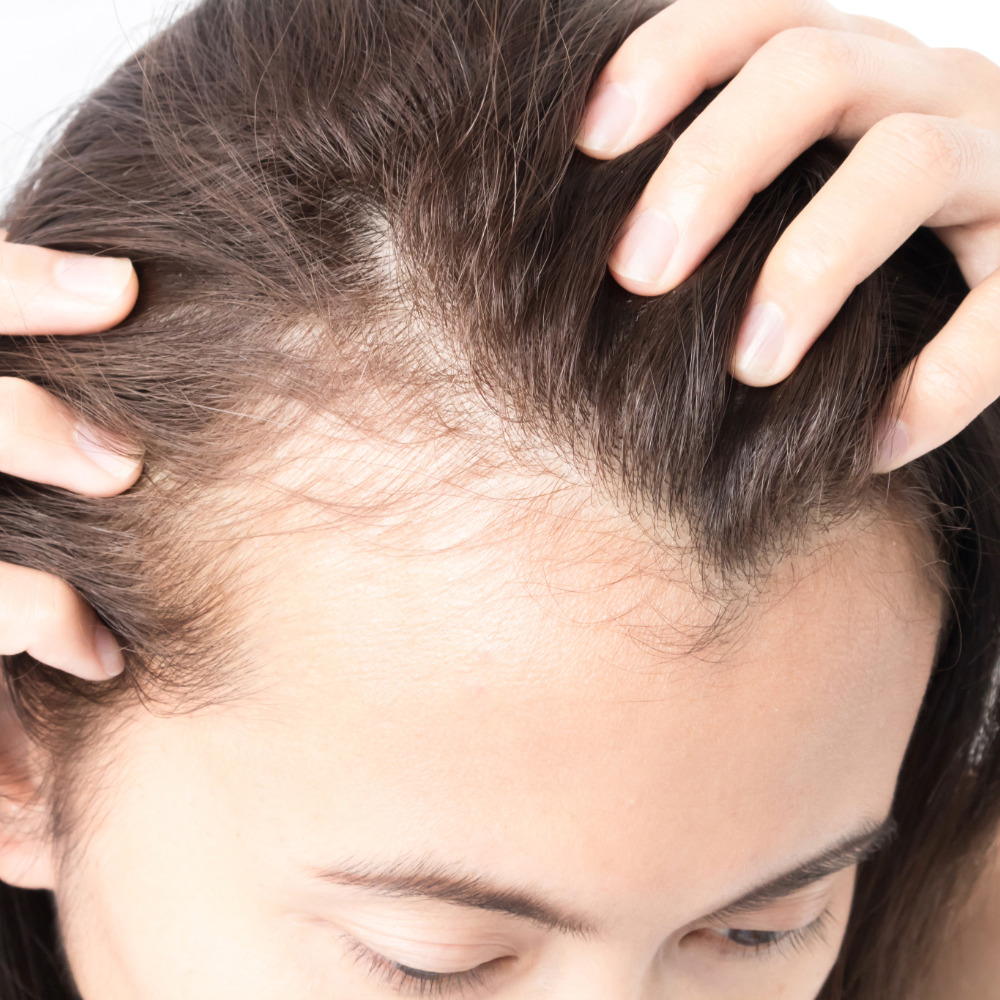
In men, androgenetic alopecia typically begins with a receding hairline and thinning at the crown, eventually progressing to partial or complete baldness on top of the head. In women, the pattern is different—hair usually thins diffusely across the top of the scalp while the hairline remains intact. Women rarely experience complete baldness from this condition.
Androgenetic alopecia is progressive, meaning it worsens over time without treatment. However, several effective treatments can slow progression and, in many cases, stimulate regrowth.
Alopecia Areata
Alopecia areata is an autoimmune condition in which the immune system mistakenly attacks hair follicles, causing hair to fall out in round, smooth patches. These patches most commonly appear on the scalp but can occur anywhere on the body. The condition can affect people of any age, including children.
In most cases, alopecia areata causes patchy hair loss that may regrow on its own or with treatment. However, some people experience more extensive hair loss. Alopecia totalis refers to complete loss of scalp hair, while alopecia universalis involves loss of all body hair. The course of alopecia areata is unpredictable—hair may regrow completely, partially, or not at all, and the condition may recur.
Telogen Effluvium
Telogen effluvium is a common form of temporary hair loss that occurs when a significant number of hair follicles are pushed prematurely into the resting (telogen) phase. About two to three months after the triggering event, affected hairs shed, often causing noticeable thinning.
Many factors can trigger telogen effluvium, including major physical or emotional stress, serious illness or surgery, significant weight loss, childbirth, hormonal changes, nutritional deficiencies, certain medications, and thyroid disorders. The good news is that telogen effluvium is usually temporary—once the underlying trigger is addressed, hair typically regrows within six to nine months.
Traction Alopecia
Traction alopecia results from prolonged tension on hair follicles caused by tight hairstyles such as ponytails, braids, cornrows, extensions, or hair weaves. Over time, this constant pulling damages follicles and can lead to permanent hair loss if the tension continues.
Traction alopecia is preventable and, if caught early, reversible. Changing hairstyles to reduce tension allows damaged follicles to recover and hair to regrow. However, if traction continues for too long, the damage may become permanent.
Scarring Alopecia (Cicatricial Alopecia)
Scarring alopecia refers to a group of rare conditions in which inflammation destroys hair follicles and replaces them with scar tissue, resulting in permanent hair loss. The scalp may appear smooth and shiny in affected areas, or there may be redness, scaling, or other changes.
Several different conditions can cause scarring alopecia, including lichen planopilaris, frontal fibrosing alopecia, central centrifugal cicatricial alopecia, and discoid lupus. Early diagnosis and treatment are crucial for preserving remaining hair, as lost follicles cannot be regenerated once scarring occurs.
Other Causes of Hair Loss
Additional factors that can contribute to hair loss include thyroid disorders (both hypothyroidism and hyperthyroidism), iron deficiency and other nutritional deficiencies, hormonal changes related to menopause or polycystic ovary syndrome, certain medications (including chemotherapy, blood thinners, and some antidepressants), scalp infections such as ringworm, and trichotillomania (a compulsive hair-pulling disorder).
Hair Loss in Women
While hair loss is often thought of as a male problem, it affects women far more commonly than many people realize. By age 50, approximately half of women will experience noticeable hair loss. Female hair loss can be particularly distressing because society often associates thick, healthy hair with femininity and beauty.
Women’s hair loss patterns and causes often differ from men’s. Female pattern hair loss typically causes diffuse thinning across the top of the scalp rather than a receding hairline or bald spots. Hormonal factors play a significant role—many women notice increased shedding after pregnancy, during menopause, or when starting or stopping birth control pills.
Dr. Daoud has extensive experience treating hair loss in women and understands the unique concerns female patients face. She takes a comprehensive approach that considers hormonal factors, nutritional status, styling practices, and other potential contributors to develop an effective, personalized treatment plan.
Diagnosing Hair Loss
Accurate diagnosis is the foundation of effective hair loss treatment. Because so many different conditions can cause hair loss, determining the specific cause requires careful evaluation.
During your appointment at Glo Dermatology, Dr. Daoud will begin by discussing your hair loss history in detail. She’ll ask when you first noticed changes, whether the loss has been gradual or sudden, whether you’re experiencing shedding or thinning, and what pattern the loss is following. She’ll also ask about your medical history, medications, family history of hair loss, diet, stress levels, and hair care practices.
Next, Dr. Daoud will examine your scalp and hair carefully, looking for patterns of loss, signs of inflammation or scarring, and the condition of remaining hair. She may perform a pull test (gently tugging on a section of hair to see how many hairs come out) to assess active shedding.
Depending on the suspected cause, additional testing may be recommended. Blood tests can identify thyroid disorders, iron deficiency, hormonal imbalances, and other medical conditions that contribute to hair loss. A scalp biopsy, in which a small sample of scalp tissue is examined under a microscope, can help diagnose scarring alopecia and other conditions. Dermoscopy (examination with a specialized magnifying device) allows detailed visualization of the scalp and hair follicles.
Hair Loss Treatment Options
Treatment for hair loss depends on the underlying cause, the type of hair loss, how long it’s been occurring, and your individual goals and preferences. Dr. Daoud will develop a personalized treatment plan designed to address your specific situation.
Topical Medications
Minoxidil (Rogaine) is an FDA-approved topical treatment for androgenetic alopecia in both men and women. Applied directly to the scalp, minoxidil helps stimulate hair follicles and prolong the growth phase. It’s available over the counter in various strengths and formulations. Consistent, long-term use is required to maintain results—stopping treatment typically leads to renewed hair loss within a few months.
For certain types of hair loss, topical corticosteroids may be prescribed to reduce inflammation that’s damaging hair follicles. Other topical treatments, including anthralin and topical immunotherapy, may be used for alopecia areata.
Oral Medications
Finasteride (Propecia) is an FDA-approved oral medication for male pattern hair loss. It works by blocking the conversion of testosterone to dihydrotestosterone (DHT), the hormone responsible for shrinking hair follicles in androgenetic alopecia. Finasteride is highly effective for many men but is not approved for use in women of childbearing age due to the risk of birth defects.
For women with hair loss related to hormonal factors, anti-androgen medications such as spironolactone may be prescribed. These medications block the effects of androgens on hair follicles and can be effective for female pattern hair loss.
Other oral treatments may be recommended depending on the cause of hair loss. Nutritional supplements can address deficiencies contributing to hair loss. Immunosuppressant medications may be used for severe alopecia areata. Treating underlying conditions like thyroid disorders can resolve associated hair loss.
Injectable Treatments
Corticosteroid injections directly into the scalp are a common treatment for alopecia areata. These injections suppress the local immune response that’s attacking hair follicles, allowing hair to regrow. Multiple sessions are typically needed, and results vary.
Platelet-rich plasma (PRP) therapy is an emerging treatment that uses concentrated growth factors from your own blood to stimulate hair follicles. During PRP treatment, a small amount of blood is drawn, processed to concentrate the platelets, and then injected into the scalp. While research is ongoing, many patients report positive results from PRP therapy.
Low-Level Laser Therapy
Low-level laser therapy (LLLT) uses red light wavelengths to stimulate hair follicles and promote growth. FDA-cleared devices are available for home use in the form of combs, caps, and helmets. While results vary, some patients find LLLT helpful as part of a comprehensive hair loss treatment plan.
Hair Restoration Surgery
For patients with permanent hair loss who desire more dramatic results, hair transplantation surgery may be an option. During this procedure, hair follicles are harvested from areas of the scalp with good hair growth (typically the back and sides of the head) and transplanted to thinning or bald areas. Modern techniques produce natural-looking results, though multiple sessions may be needed for optimal coverage.
Dr. Daoud can discuss whether hair transplantation might be appropriate for your situation and provide referrals to qualified hair restoration surgeons if desired.
What to Expect from Treatment
Hair loss treatment requires patience. Hair grows slowly—about half an inch per month—so it takes time to see visible improvement. Most treatments require at least three to six months of consistent use before results become apparent, and it may take a year or longer to see the full benefit.
It’s also important to have realistic expectations. While many patients experience significant improvement with treatment, results vary depending on the cause and extent of hair loss, how long it’s been occurring, and individual response to treatment. In some cases, treatment can stop further loss and stimulate regrowth. In others, the goal may be to slow progression and maintain existing hair.
Ongoing treatment is often necessary to maintain results. For conditions like androgenetic alopecia, stopping treatment typically leads to resumed hair loss. Dr. Daoud will discuss what to expect from your specific treatment plan and help you understand the commitment involved.
Lifestyle Factors and Hair Health
While medical treatment addresses the underlying causes of hair loss, certain lifestyle practices support healthy hair growth and complement your treatment plan.
Eating a balanced diet rich in protein, iron, zinc, biotin, and other nutrients provides the building blocks hair needs to grow. If you have deficiencies, supplements may be recommended. Managing stress is important, as chronic stress can trigger or worsen hair loss. Exercise, adequate sleep, and stress-reduction techniques all support overall health and hair health.
Gentle hair care practices help prevent additional damage and loss. Avoid hairstyles that pull tightly on hair. Limit heat styling and harsh chemical treatments. Use a wide-toothed comb on wet hair to prevent breakage. Choose gentle, sulfate-free shampoos and conditioners.
Protecting your scalp from sun damage is also important, especially in areas of thinning. Wear a hat or use scalp sunscreen when spending time outdoors.
Schedule Your Hair Loss Consultation Today
If you’re concerned about hair loss or thinning, don’t wait to seek help. Early intervention often produces the best results, as it’s easier to maintain existing hair than to regrow hair that’s been lost. Dr. Shaza Daoud and the team at Glo Dermatology are here to help you understand what’s causing your hair loss and explore your treatment options.
Take the first step toward healthier, fuller hair by scheduling a consultation at our Parma office. Contact us today at (216) 351-7700 to book your appointment. We welcome patients from throughout Greater Cleveland and Northeast Ohio, including Parma Heights, Brooklyn, Seven Hills, Independence, Middleburg Heights, and surrounding communities.
Frequently Asked Questions About Hair Loss
Is hair loss hereditary?
The most common type of hair loss, androgenetic alopecia (male and female pattern hair loss), is hereditary. If your parents or grandparents experienced hair loss, you’re more likely to as well. However, many other causes of hair loss are not hereditary, which is why proper diagnosis is important.
Can stress cause hair loss?
Yes, significant physical or emotional stress can trigger a type of hair loss called telogen effluvium. This typically occurs two to three months after the stressful event and causes diffuse shedding. The good news is that stress-related hair loss is usually temporary—hair typically regrows once the stress is resolved.
Will my hair grow back?
Whether hair will regrow depends on the cause of your hair loss. Many types of hair loss, including telogen effluvium and some cases of alopecia areata, are temporary, and hair often regrows on its own or with treatment. Androgenetic alopecia is progressive but can often be slowed or partially reversed with treatment. Scarring alopecia, unfortunately, causes permanent hair loss because the follicles are destroyed.
When should I see a dermatologist about hair loss?
You should schedule an appointment if you notice sudden or patchy hair loss, excessive shedding, or gradually thinning hair that concerns you. Early evaluation is especially important if you have any scalp symptoms like itching, burning, redness, or scaling, or if hair loss is accompanied by other symptoms. The sooner hair loss is evaluated, the more treatment options are typically available.
Are hair loss treatments safe?
FDA-approved hair loss treatments like minoxidil and finasteride have well-established safety profiles when used as directed. Like all medications, they can have side effects, which Dr. Daoud will discuss with you. She’ll help you weigh the benefits and risks to determine the best approach for your situation.
How can I prevent hair loss?
While hereditary hair loss can’t be entirely prevented, early treatment can slow progression significantly. For other types of hair loss, prevention strategies include managing stress, eating a nutritious diet, treating underlying medical conditions, avoiding tight hairstyles and harsh chemical treatments, and handling hair gently.