
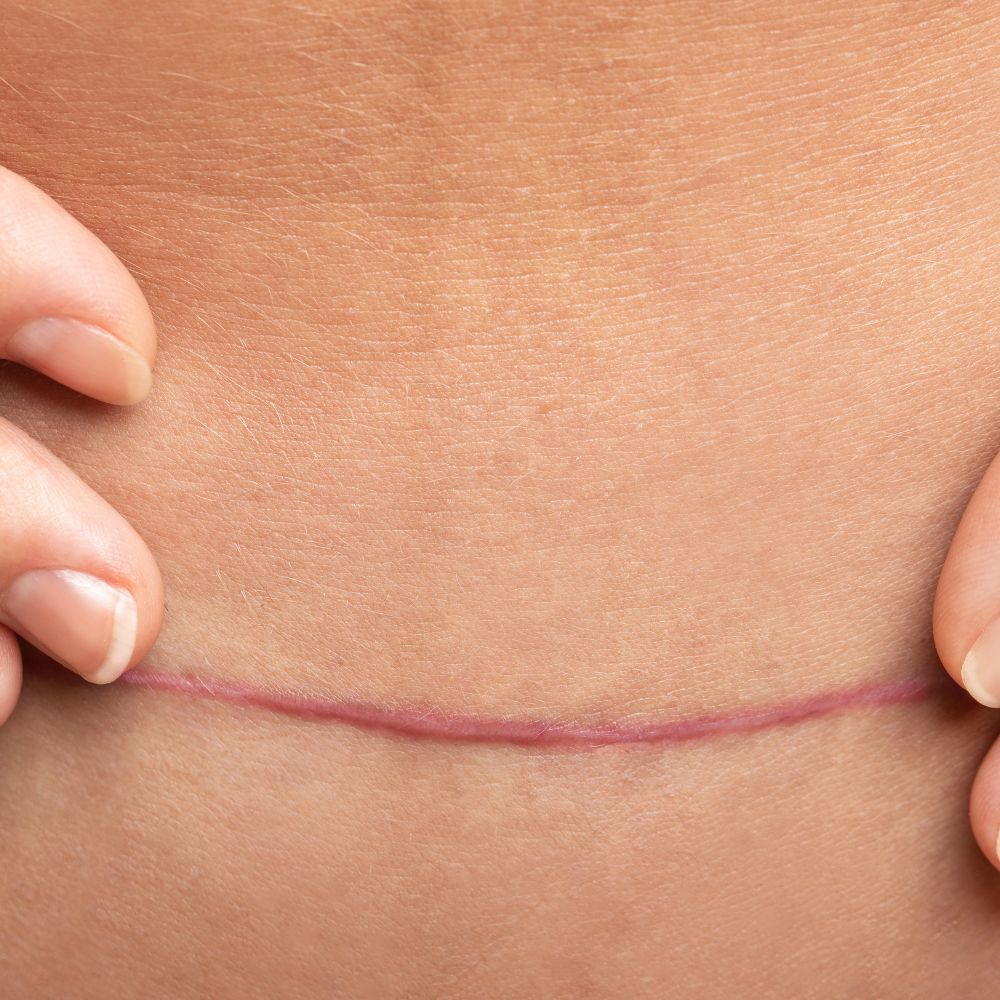
Scar Treatment to Smooth Skin and Improve Appearance
Scars tell the story of our skin’s healing process—but that doesn’t mean you have to live with prominent, bothersome scars that affect your confidence. At Glo Dermatology in Parma, Ohio, Dr. Shaza Daoud offers a comprehensive range of scar treatments to help patients throughout Greater Cleveland minimize the appearance of acne scars, surgical scars, injury scars, and other types of scarring.
Whether you’re self-conscious about acne scars on your face, have a prominent surgical scar, or struggle with keloids that won’t stop growing, professional treatment can make a significant difference. Dr. Daoud combines her expertise in dermatology with the latest treatment technologies to create personalized scar treatment plans that address your unique concerns. Discover how modern scar treatments can help you feel more confident in your skin.
Understanding Scars
Scars form as part of the body’s natural healing process. When the skin is injured—whether from acne, surgery, burns, accidents, or other causes—the body produces collagen fibers to repair the damage. The way these fibers arrange themselves during healing determines the scar’s final appearance.
Normal scars gradually fade and flatten over time but never disappear completely. However, some scars become raised, depressed, discolored, or otherwise problematic. Factors that influence how scars develop include the depth and size of the wound, its location on the body, your age and genetics, how well the wound was cared for during healing, and whether complications like infection occurred.
While no treatment can make a scar completely invisible, modern dermatological treatments can significantly improve a scar’s appearance, making it less noticeable and helping you feel more comfortable in your skin.
Types of Scars We Treat
Different types of scars require different treatment approaches. Dr. Daoud has experience treating all types of scarring.
Acne Scars
Acne scars are among the most common concerns patients bring to our practice. They develop when inflammatory acne damages the skin and underlying tissue. Acne scars come in several forms.
Atrophic scars are depressed or indented scars that sit below the surrounding skin surface. They include ice pick scars (narrow, deep scars that look like the skin was punctured), boxcar scars (broader depressions with defined edges), and rolling scars (wave-like undulations in the skin caused by fibrous bands beneath the surface).
Hypertrophic scars are raised scars that stay within the boundaries of the original acne lesion.
Post-inflammatory hyperpigmentation (PIH), while not technically scarring, leaves dark marks where acne lesions have healed and is often treated alongside true acne scars.
Surgical Scars
Any surgical incision leaves a scar, though the appearance varies based on surgical technique, location, and individual healing. Some surgical scars are barely noticeable, while others become raised, wide, or discolored.
Keloid Scars
Keloids are raised scars that grow beyond the boundaries of the original wound. Unlike normal scars that gradually improve, keloids can continue growing over time and may become itchy, painful, or tender. Keloids are more common in people with darker skin tones and tend to run in families.
Hypertrophic Scars
Like keloids, hypertrophic scars are raised and thickened, but they stay within the boundaries of the original wound. They often develop after burns, surgeries, or piercings and may improve over time without treatment, though intervention can accelerate improvement.
Traumatic Scars
Scars from accidents, injuries, or burns vary widely in appearance depending on the type and severity of the trauma. They may be depressed, raised, discolored, or have irregular texture.
Stretch Marks (Striae)
Stretch marks are a form of scarring that occurs when skin stretches rapidly due to growth, pregnancy, or weight changes. While different from other scars, they can be improved with many of the same treatments.
Scar Treatment Options
Glo Dermatology offers multiple treatment approaches for scars. Dr. Daoud will recommend the most appropriate options based on your scar type, location, and treatment goals.
Microneedling
Microneedling uses tiny needles to create controlled micro-injuries in the skin, triggering the body’s natural healing response and stimulating collagen production. This remodeling process can significantly improve the appearance of atrophic (depressed) scars, including acne scars.
Multiple treatments are typically needed for optimal results, with sessions spaced about four to six weeks apart. Microneedling can be combined with topical treatments like platelet-rich plasma (PRP) for enhanced results.
Chemical Peels
Chemical peels use acid solutions to remove damaged surface skin layers, promoting cell turnover and revealing fresher skin. For scarring, peels can help smooth texture irregularities, reduce discoloration, and improve overall skin quality.
The depth and type of peel recommended depends on your scar type and skin characteristics. A series of peels may be recommended for cumulative improvement.
Laser Treatments
Various laser technologies can effectively treat scars.
Fractional lasers create microscopic columns of treated tissue surrounded by untreated tissue, stimulating collagen remodeling while allowing rapid healing. They’re particularly effective for atrophic acne scars and surgical scars.
Pulsed dye lasers target the red or pink color in newer scars and can help flatten raised scars.
Ablative lasers remove thin layers of skin and are used for more aggressive resurfacing of severe scarring.
Dr. Daoud will recommend the most appropriate laser technology based on your specific scar type and skin characteristics.
Injectable Treatments
Various injectables can improve scar appearance.
Corticosteroid injections help flatten raised and keloid scars by reducing inflammation and collagen production. Multiple injections are typically needed, spaced several weeks apart.
5-Fluorouracil (5-FU) injections may be used alone or combined with corticosteroids for resistant keloids and hypertrophic scars.
Creating Your Scar Treatment Plan
Scars are highly individual, and effective treatment requires a personalized approach. During your consultation, Dr. Daoud will examine your scars, discuss your concerns and goals, and develop a treatment plan tailored to your needs.
Your plan may involve a single treatment modality or a combination of approaches for optimal results. Many patients achieve the best outcomes with combination therapy—for example, microneedling to stimulate collagen and perhaps filler to add volume.
Dr. Daoud will explain what results you can realistically expect and how many treatments may be needed. She’ll also discuss any special considerations based on your skin type, as some treatments require modification for darker skin tones to minimize the risk of pigmentation changes.
What to Expect from Scar Treatment
Realistic Expectations
No treatment can make a scar completely invisible—the goal is significant improvement in appearance. Most patients see meaningful reduction in scar visibility, improved skin texture, and increased confidence.
Results depend on the type and severity of scarring, the treatments used, and individual healing characteristics. Multiple treatments are typically needed for optimal improvement.
Treatment Timeline
Scar treatment is usually not a one-time procedure. Most patients undergo a series of treatments over several months. Even after completing treatment, continued improvement often occurs as collagen remodeling continues for months afterward.
Recovery
Recovery varies by treatment. Some treatments like chemical peels and microneedling involve a few days of redness and flaking. Laser treatments may require a week or more of recovery depending on the intensity. Injectable treatments typically have minimal downtime.
Dr. Daoud will explain what to expect from your specific treatment plan.
Preventing and Minimizing New Scars
If you have a new wound or are planning surgery, taking steps to minimize scarring from the start can make a significant difference.
Keep wounds clean and properly moisturized during healing. Follow all wound care instructions from your surgeon or healthcare provider. Protect healing wounds from sun exposure, which can cause permanent darkening. Avoid picking at scabs or healing skin. Consider silicone sheets or gels once the wound has closed. Seek treatment early if a scar appears to be developing abnormally.
For patients prone to keloids or problem scarring, Dr. Daoud can provide guidance on preventive measures before surgery or other procedures.
Schedule Your Scar Treatment Consultation Today
Don’t let scars hold you back from feeling confident in your skin. Dr. Shaza Daoud and the team at Glo Dermatology are here to help you explore your options and develop a personalized treatment plan to minimize your scars.
Contact our Parma office today at (216) 351-7700 to schedule your consultation. We welcome patients from throughout Greater Cleveland and Northeast Ohio, including Parma Heights, Brooklyn, Seven Hills, Independence, Middleburg Heights, and surrounding communities.
Frequently Asked Questions About Scar Treatment
Can scars be completely removed?
No treatment can make a scar completely invisible. However, modern treatments can significantly improve a scar’s appearance—reducing its size, flattening raised areas, filling depressed areas, and improving color and texture. The goal is to make scars much less noticeable.
How long does scar treatment take to work?
Results develop gradually over weeks to months, depending on the treatment. Collagen remodeling—the process that improves scar appearance—continues for months after treatment. Multiple treatment sessions are typically needed for optimal results.
Are scar treatments painful?
Most scar treatments cause only mild discomfort. Topical numbing cream is applied before procedures like microneedling and laser treatment. Injections may cause brief stinging. Dr. Daoud takes steps to ensure your comfort during treatment.
Can old scars be treated?
Yes, even scars that have been present for years can often be improved with treatment. While newer scars (less than a year old) may respond more readily to some treatments, significant improvement is possible for older scars as well.
Will my keloid come back after treatment?
Keloids can recur after treatment, which is why ongoing management is often necessary. Combining treatments (such as surgery followed by corticosteroid injections or radiation) can reduce recurrence risk. Dr. Daoud will discuss strategies to minimize the chance of keloid recurrence.
Is scar treatment covered by insurance?
Coverage depends on your insurance plan and whether the treatment is considered medically necessary or cosmetic. Scars that cause functional problems or significant psychological distress may be covered. We recommend checking with your insurance provider for specific coverage information.