
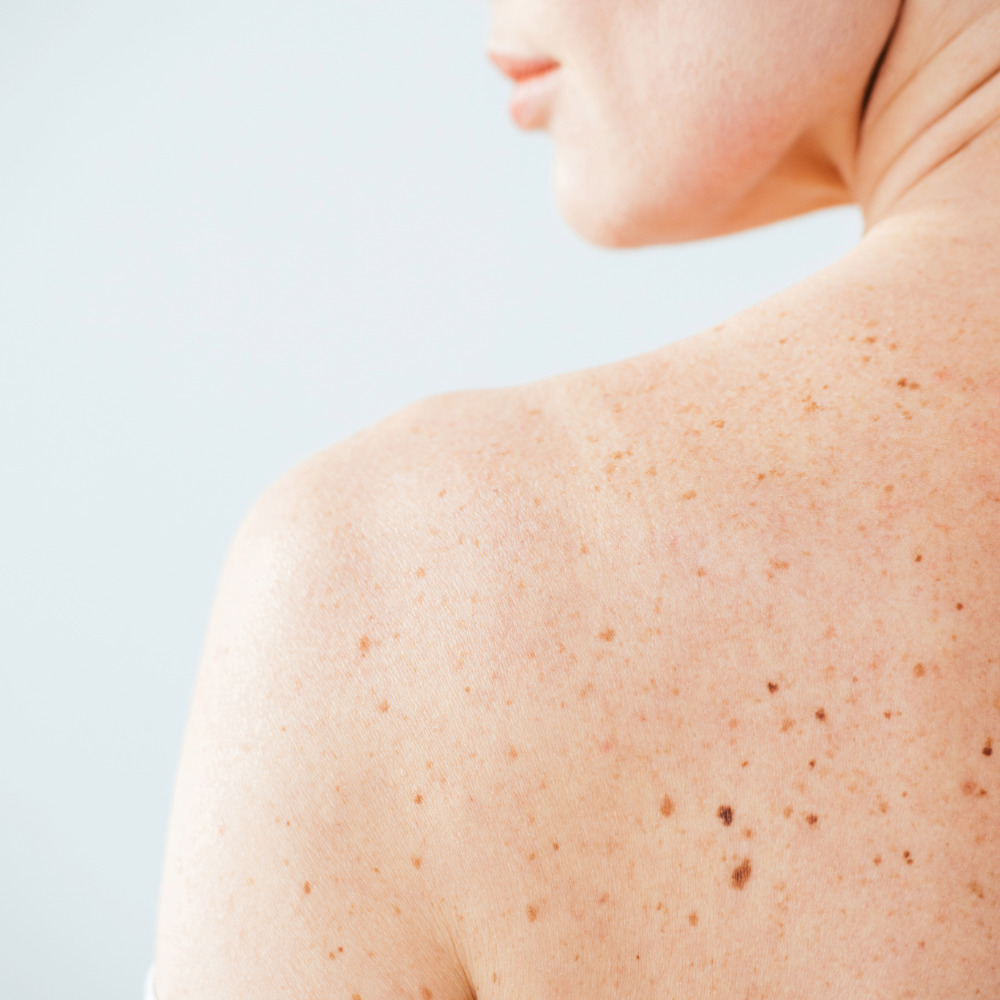
Mole Evaluation for Early Detection and Peace of Mind
Almost everyone has moles—most adults have between 10 and 40 of these common skin growths scattered across their bodies. While the vast majority of moles are completely harmless, changes in a mole’s appearance can sometimes be an early warning sign of melanoma, the most serious form of skin cancer. At Glo Dermatology in Parma, Ohio, Dr. Shaza Daoud provides expert mole evaluations to help patients throughout Greater Cleveland monitor their skin health and catch potential problems early, when they’re most treatable.
Whether you’ve noticed a new mole, observed changes in an existing one, or simply want peace of mind about your skin, professional evaluation is the best way to protect yourself. Dr. Daoud combines thorough clinical examination with her extensive dermatological training to assess moles accurately and recommend appropriate next steps. For moles that are suspicious, bothersome, or cosmetically undesirable, she offers safe, effective removal procedures right in our Parma office. At Glo Dermatology, your skin health and peace of mind are our top priorities.
Understanding Moles
Moles, medically known as nevi, are clusters of pigmented cells called melanocytes that appear as small, colored spots on the skin. They can develop anywhere on the body, including the scalp, between fingers and toes, and under nails. Moles vary widely in appearance—they may be flat or raised, round or oval, and range in color from pink to tan to dark brown or black.
Most moles develop during childhood and adolescence, though new moles can appear throughout adulthood. Sun exposure plays a role in mole development, which is why people with significant sun exposure often have more moles. Genetics also influence how many moles you develop—if your parents have numerous moles, you’re more likely to have many as well.
Moles typically go through a natural lifecycle. They often start as flat, colored spots and may become raised over time. Some moles gradually fade and disappear as you age. These normal changes occur slowly over years and are generally nothing to worry about. However, rapid changes in a mole’s appearance warrant prompt evaluation.
Types of Moles
Not all moles are alike. Understanding the different types can help you monitor your skin and recognize when something may need attention.
Common Moles (Acquired Nevi)
Common moles are the typical moles most people have. They usually appear during childhood or adolescence and may continue developing into early adulthood. Common moles are generally smaller than a pencil eraser (about 5 millimeters), have distinct borders, uniform color, and a round or oval shape. They may be flat or raised and can range from pink to dark brown depending on your skin tone. Having many common moles (more than 50) slightly increases your risk of melanoma, making regular skin checks especially important.
Congenital Moles (Congenital Nevi)
Congenital moles are present at birth or appear within the first few months of life. They occur in about 1 percent of newborns and can range from small spots to large growths covering significant areas of the body. The risk of melanoma developing in a congenital mole increases with the mole’s size—large congenital moles carry a higher risk and require careful monitoring throughout life.
Atypical Moles (Dysplastic Nevi)
Atypical moles have unusual features that set them apart from common moles. They tend to be larger (often bigger than a pencil eraser), have irregular or poorly defined borders, contain multiple colors or uneven color distribution, and may have both flat and raised components. While atypical moles themselves are benign, having many of them increases your risk of developing melanoma. People with atypical mole syndrome (also called dysplastic nevus syndrome) have numerous atypical moles and a significantly elevated melanoma risk, requiring close dermatological surveillance.
Spitz Nevi
Spitz nevi are a type of mole that most commonly appears in children and young adults. They’re typically dome-shaped, pink or reddish-brown, and may grow rapidly initially before stabilizing. While Spitz nevi are benign, they can sometimes resemble melanoma under the microscope, making expert evaluation important.
When to Be Concerned About a Mole
While most moles are harmless, melanoma can develop in an existing mole or appear as a new growth that resembles a mole. Knowing the warning signs helps you identify potentially problematic moles early.
The ABCDE rule provides a helpful framework for evaluating moles:
A – Asymmetry: One half of the mole doesn’t match the other half. Benign moles are typically symmetrical.
B – Border: The edges are irregular, ragged, notched, or blurred rather than smooth and well-defined.
C – Color: The color is uneven, with shades of brown, black, tan, red, white, or blue within the same mole. Normal moles are usually a single, uniform color.
D – Diameter: The mole is larger than 6 millimeters (about the size of a pencil eraser), though melanomas can be smaller when first detected.
E – Evolving: The mole is changing in size, shape, color, or texture, or you notice new symptoms like itching, bleeding, or crusting.
Any mole that exhibits one or more of these characteristics deserves prompt evaluation. Additionally, you should have any new mole that appears after age 30 checked, as well as any mole that looks distinctly different from your other moles (the “ugly duckling” sign).
Other warning signs that warrant immediate attention include a mole that bleeds, oozes, or becomes crusty; a mole that becomes painful, tender, or itchy; a sore that doesn’t heal; or redness or swelling that extends beyond the border of a mole.
The Importance of Professional Mole Evaluation
While self-examination is an important part of skin health, professional evaluation provides a level of expertise that self-checks cannot match. Dr. Daoud has the training and experience to recognize subtle features that distinguish benign moles from potentially dangerous ones.
During a mole evaluation at Glo Dermatology, Dr. Daoud will examine your moles carefully, often using dermoscopy—a specialized technique that uses a handheld magnifying device with polarized light to visualize structures beneath the skin’s surface that aren’t visible to the naked eye. Dermoscopy significantly improves the accuracy of mole assessment and helps identify melanoma at earlier, more treatable stages.
If Dr. Daoud identifies any moles of concern, she may recommend monitoring with periodic photographs to track changes over time, or she may recommend biopsy for definitive diagnosis. A biopsy involves removing all or part of the mole and examining it under a microscope to determine whether abnormal cells are present.
Regular professional skin examinations are especially important if you have numerous moles, atypical moles, a personal or family history of melanoma, fair skin that burns easily, a history of significant sun exposure or sunburns, or a weakened immune system.
Mole Removal Procedures
There are several reasons you might want a mole removed. Some moles are removed because they show concerning features and need to be biopsied. Others are removed because they’re bothersome—perhaps they catch on clothing or jewelry, are located in an area prone to irritation, or are cosmetically undesirable. Whatever your reason, Dr. Daoud offers safe, effective mole removal procedures performed right in our Parma office.
Excisional Removal
Excisional removal involves cutting out the entire mole along with a margin of surrounding normal skin. This technique is typically used for moles that need to be examined under a microscope (biopsied) or for moles that are raised or extend deeper into the skin. The wound is usually closed with stitches, which are removed after one to two weeks depending on the location. Excisional removal provides a complete tissue sample for pathological examination and ensures the entire mole is removed.
Shave Removal
Shave removal uses a surgical blade to shave off the mole at or just below the skin’s surface. This technique is often used for raised moles that are being removed for cosmetic reasons or because they’re bothersome. Shave removal typically doesn’t require stitches, and the wound heals on its own over one to two weeks. While shave removal may leave a small, flat scar, it’s often less noticeable than the scar from excisional removal.
Punch Biopsy
For smaller moles, a punch biopsy may be used. This technique uses a circular blade to remove a small, cylindrical sample of tissue. Punch biopsies may or may not require a stitch to close, depending on their size.
Dr. Daoud will recommend the most appropriate removal technique based on the size, location, and characteristics of your mole, as well as the reason for removal. All procedures are performed with local anesthesia to ensure your comfort.
What to Expect During Mole Removal
Mole removal is a straightforward, in-office procedure that typically takes just 15 to 30 minutes. Here’s what you can expect:
Before the procedure, the area around the mole will be cleaned and a local anesthetic will be injected to numb the skin. You may feel a brief pinch or sting from the injection, but the area will be completely numb within moments.
Once you’re numb, Dr. Daoud will remove the mole using the appropriate technique. You shouldn’t feel pain during the procedure, though you may feel some pressure or movement. The actual removal takes only a few minutes.
After removal, the wound will be cleaned and dressed. Dr. Daoud will provide detailed aftercare instructions, including how to care for the wound, what to expect during healing, and signs of complications to watch for. If stitches were placed, you’ll return to have them removed in one to two weeks.
If the mole was removed for biopsy, the tissue will be sent to a laboratory for microscopic examination. Results typically take one to two weeks. Dr. Daoud will contact you to discuss the findings and any recommended next steps.
After Mole Removal: Healing and Scarring
All mole removal procedures leave some degree of scarring, though the visibility of the scar depends on several factors including the removal technique, the size and location of the mole, and individual healing characteristics.
During the healing period, it’s important to keep the wound clean and follow all aftercare instructions provided by Dr. Daoud. Avoid picking at scabs or scratching the area, as this can worsen scarring and increase infection risk. Protect the healing wound from sun exposure, as UV rays can darken scars and make them more noticeable.
Fresh scars are often pink or red and may appear more prominent initially. Over the following months, scars typically fade and flatten, becoming less noticeable over time. The complete maturation of a scar can take a year or longer.
If you’re concerned about scarring, especially for moles in visible locations, discuss this with Dr. Daoud before the procedure. She can explain what to expect and recommend techniques to minimize scarring.
Monitoring Your Moles at Home
Between professional skin examinations, regular self-checks help you stay aware of changes in your moles and catch potential problems early. The Skin Cancer Foundation recommends performing a self-examination once a month.
To perform a thorough self-exam, you’ll need a full-length mirror, a hand mirror, and good lighting. Examine your entire body, including areas that don’t get sun exposure and areas that are difficult to see (use mirrors or ask a partner to help). Don’t forget to check your scalp, between fingers and toes, the soles of your feet, and under your nails.
As you examine each mole, consider the ABCDE criteria discussed earlier. It can be helpful to take photographs of your moles to track changes over time. If you notice anything concerning, schedule an appointment with Dr. Daoud promptly—don’t wait for your next routine examination.
Moles and Sun Protection
Sun exposure plays a significant role in both mole development and melanoma risk. Protecting your skin from ultraviolet radiation is one of the most important things you can do to reduce your risk of skin cancer.
Practice sun safety by applying broad-spectrum sunscreen with SPF 30 or higher daily, even on cloudy days. Reapply every two hours and after swimming or sweating. Seek shade during peak sun hours (10 a.m. to 4 p.m.). Wear protective clothing, including wide-brimmed hats, long sleeves, and sunglasses. Avoid tanning beds, which significantly increase melanoma risk.
For moles in sun-exposed areas, sun protection may help prevent changes that could indicate problems. However, sun protection alone isn’t sufficient—regular monitoring and professional examinations remain essential.
Schedule Your Mole Evaluation Today
Whether you’re concerned about a specific mole or simply want a comprehensive skin check, Dr. Shaza Daoud and the team at Glo Dermatology are here to help. Early detection saves lives when it comes to melanoma, and regular professional evaluations are your best defense.
Don’t ignore changes in your moles or put off that skin check you’ve been meaning to schedule. Contact our Parma office today at (216) 351-7700 to book your mole evaluation. We welcome patients from throughout Greater Cleveland and Northeast Ohio, including Parma Heights, Brooklyn, Seven Hills, Independence, Middleburg Heights, and surrounding communities.
Frequently Asked Questions About Moles
Are moles dangerous?
The vast majority of moles are completely benign and pose no health risk. However, melanoma (a serious form of skin cancer) can develop in an existing mole or appear as a new growth resembling a mole. This is why monitoring your moles and having concerning changes evaluated promptly is important.
Should I have all my moles removed?
No, there’s no need to remove moles that are benign and aren’t bothering you. However, moles that show warning signs, are frequently irritated, or are cosmetically undesirable can be removed. Dr. Daoud can help you determine which moles, if any, should be removed.
Can moles grow back after removal?
If a mole is completely removed, it shouldn’t grow back. However, if some mole cells remain after removal (which can occasionally happen with shave removal), the mole may partially regrow. If you notice regrowth in an area where a mole was removed, contact our office for evaluation.
Does mole removal hurt?
Mole removal is performed with local anesthesia, so you shouldn’t feel pain during the procedure. You may feel a brief pinch when the anesthetic is injected and some pressure during the removal, but the area will be numb. After the anesthesia wears off, you may experience mild discomfort that can typically be managed with over-the-counter pain relievers.
How do I know if a mole is cancerous?
You can’t definitively determine whether a mole is cancerous just by looking at it—that requires microscopic examination of the tissue (biopsy). However, the ABCDE criteria (Asymmetry, Border irregularity, Color variation, Diameter larger than 6mm, and Evolution/change) can help identify moles that should be evaluated by a dermatologist.
How often should I have my moles checked?
For most adults, an annual skin examination is recommended. If you have numerous moles, atypical moles, a personal or family history of melanoma, or other risk factors, more frequent examinations may be appropriate. Dr. Daoud will recommend a screening schedule based on your individual risk profile.