
Psoriasis Treatment To Help You Feel Better Again
Living with psoriasis can be challenging, frustrating, and at times overwhelming. The persistent patches of red, scaly skin can affect not only your physical comfort but also your confidence and emotional well-being. At Glo Dermatology in Parma, Ohio, Dr. Shaza Daoud understands the profound impact psoriasis
Living with psoriasis can be challenging, frustrating, and at times overwhelming. The persistent patches of red, scaly skin can affect not only your physical comfort but also your confidence and emotional well-being. At Glo Dermatology in Parma, Ohio, Dr. Shaza Daoud understands the profound impact psoriasis can have on your daily life, and she’s committed to helping patients throughout Greater Cleveland find effective, lasting relief from this chronic condition.
Psoriasis treatment has advanced significantly in recent years, offering more options than ever before for managing symptoms and achieving clearer skin. Whether you’re newly diagnosed or have been struggling with psoriasis for years, Dr. Daoud will work closely with you to develop a personalized treatment plan that addresses your unique needs, lifestyle, and goals. At Glo Dermatology, we believe that effective psoriasis management goes beyond treating visible symptoms—it’s about improving your overall quality of life.
What Is Psoriasis?
Psoriasis is a chronic autoimmune condition that causes the rapid buildup of skin cells. In healthy skin, new cells typically grow and shed over a period of about a month. With psoriasis, the immune system mistakenly triggers inflammation that accelerates this process dramatically, causing new skin cells to form in just a few days. Because the body can’t shed these cells quickly enough, they pile up on the skin’s surface, forming the thick, scaly patches characteristic of psoriasis.
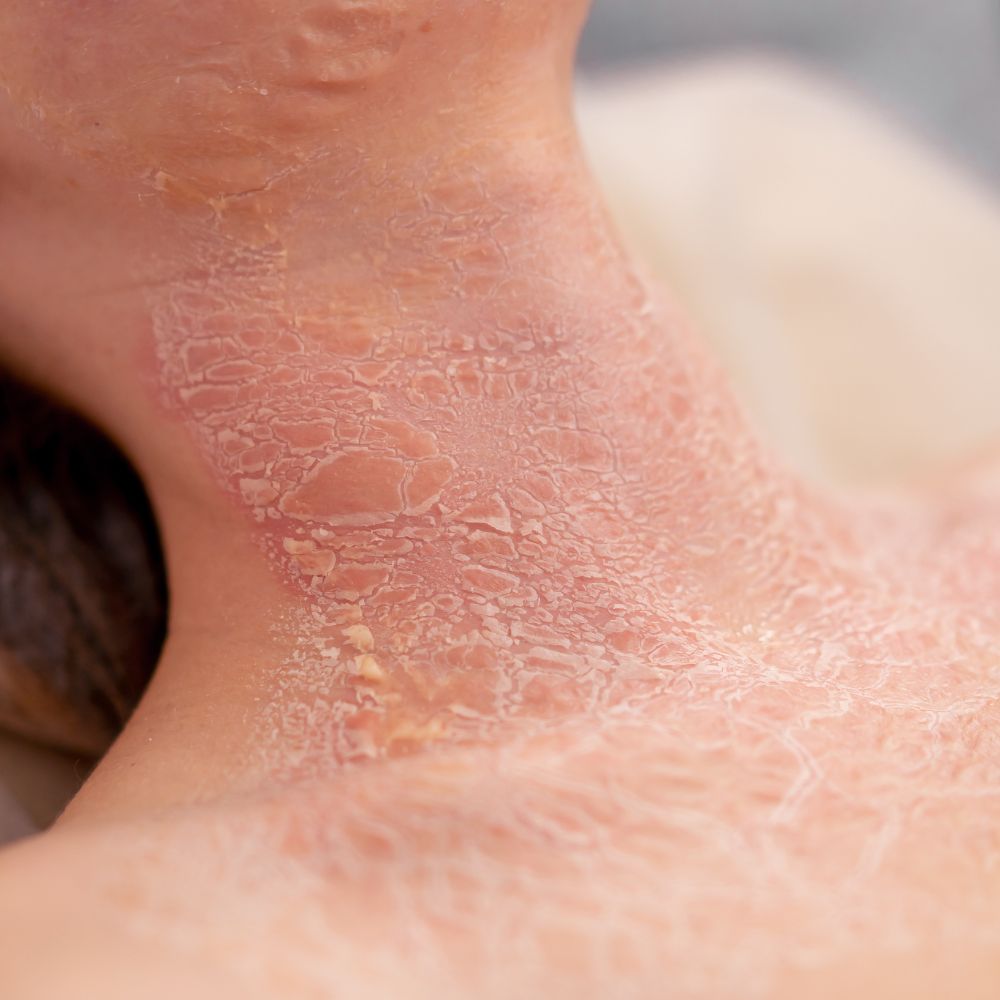
These patches, called plaques, often appear red or pink on lighter skin tones and may appear purple, gray, or darker brown on deeper skin tones. The scales covering the plaques are typically silvery-white. Psoriasis plaques can occur anywhere on the body but most commonly appear on the scalp, elbows, knees, and lower back. Many patients also experience itching, burning, or soreness in affected areas.
Psoriasis is not contagious—you cannot catch it from or spread it to another person through physical contact. It is, however, a lifelong condition that tends to go through cycles of flare-ups and remission. While there is currently no cure for psoriasis, proper treatment can significantly reduce symptoms and help patients enjoy long periods of clearer skin.
Types of Psoriasis
Psoriasis can manifest in several different forms, each with its own characteristics and treatment considerations. Accurately identifying the type of psoriasis you have is essential for developing an effective treatment plan.
Plaque Psoriasis
Plaque psoriasis is the most common form, accounting for approximately 80 to 90 percent of all cases. It causes raised, inflamed patches covered with silvery-white scales. These plaques can appear anywhere but typically develop on the elbows, knees, scalp, and lower back. Plaque psoriasis patches can range from small spots to large areas covering significant portions of the body.
Guttate Psoriasis
Guttate psoriasis appears as small, dot-like lesions that often develop suddenly, typically following a bacterial infection such as strep throat. This form is more common in children and young adults and may resolve on its own or develop into plaque psoriasis over time.
Inverse Psoriasis
Inverse psoriasis affects skin folds and areas where skin touches skin, such as the armpits, groin, under the breasts, and around the genitals. Rather than raised, scaly plaques, inverse psoriasis causes smooth, red, inflamed patches that can be particularly uncomfortable due to friction and sweating in these areas.
Pustular Psoriasis
Pustular psoriasis is characterized by white, pus-filled blisters surrounded by red, inflamed skin. Despite the appearance, these pustules are not infectious. Pustular psoriasis can be localized to certain areas (most commonly the hands and feet) or can be generalized, covering larger portions of the body.
Erythrodermic Psoriasis
Erythrodermic psoriasis is a rare but severe form that can cover most of the body with a red, peeling rash that may itch or burn intensely. This form of psoriasis can be life-threatening and requires immediate medical attention. Symptoms may include severe itching and pain, rapid heart rate, and difficulty regulating body temperature.
Nail Psoriasis
Psoriasis can also affect the fingernails and toenails, causing pitting, abnormal nail growth, discoloration, and separation of the nail from the nail bed. Nail psoriasis often accompanies other forms of psoriasis and can be particularly challenging to treat.
Psoriatic Arthritis
Up to 30 percent of people with psoriasis eventually develop psoriatic arthritis, an inflammatory condition that causes joint pain, stiffness, and swelling. Psoriatic arthritis can affect any joint and can range from mild to severe. Early diagnosis and treatment are important for preventing permanent joint damage.
What Causes Psoriasis?
While the exact cause of psoriasis isn’t fully understood, researchers believe it results from a combination of genetic and environmental factors. Psoriasis runs in families—having a parent or sibling with psoriasis increases your risk of developing the condition. However, many people with a family history never develop psoriasis, and some people with psoriasis have no family history at all.
The immune system plays a central role in psoriasis. In people with the condition, certain immune cells (T cells) become overactive and trigger inflammation in the skin. This inflammation causes the accelerated skin cell production that leads to plaque formation. Researchers continue to study why this immune dysfunction occurs and how it might be corrected.
Various factors can trigger psoriasis flare-ups or worsen existing symptoms. Common triggers include stress, skin injuries (cuts, scrapes, sunburns, or even tattoos), infections (particularly strep throat), certain medications, cold and dry weather, smoking, and heavy alcohol consumption. Identifying and avoiding your personal triggers can be an important part of managing psoriasis effectively.
Our Approach to Psoriasis Treatment
At Glo Dermatology, we take a comprehensive, patient-centered approach to psoriasis management. Dr. Daoud recognizes that psoriasis affects each person differently, and she tailors treatment plans to address your specific type of psoriasis, its severity, the areas of your body affected, your overall health, and your personal preferences and lifestyle.
During your initial consultation, Dr. Daoud will conduct a thorough examination of your skin and discuss your medical history, including any previous psoriasis treatments you’ve tried and how well they worked. She’ll ask about factors that seem to trigger or worsen your flare-ups and how psoriasis impacts your daily life. This detailed assessment allows her to develop a treatment strategy designed to achieve the best possible results for your individual situation.
Psoriasis management often requires a combination of treatments and may need to be adjusted over time as your condition changes or as new treatment options become available. Dr. Daoud will monitor your progress through regular follow-up appointments, making modifications to your treatment plan as needed to maintain optimal control of your symptoms.
Psoriasis Treatment Options
Glo Dermatology offers a full spectrum of psoriasis treatments, from topical therapies for mild cases to advanced systemic treatments for more severe or widespread disease.
Topical Treatments
Topical medications applied directly to affected skin are often the first line of treatment for mild to moderate psoriasis. Options include corticosteroids (which reduce inflammation and slow cell turnover), vitamin D analogues (which slow skin cell growth), retinoids (which normalize skin cell production), calcineurin inhibitors (particularly useful for sensitive areas), coal tar (which reduces scaling, itching, and inflammation), and salicylic acid (which helps remove scales and improve the penetration of other medications). Dr. Daoud will recommend the most appropriate topical treatments based on the location and severity of your psoriasis.
Phototherapy
Phototherapy, or light therapy, uses controlled exposure to ultraviolet (UV) light to slow skin cell growth and reduce inflammation. Narrowband UVB phototherapy is one of the most effective treatments for moderate to severe psoriasis and can produce significant improvement in many patients. Dr. Daoud can discuss whether phototherapy might be appropriate for your situation and help coordinate this treatment if needed.
Systemic Medications
For moderate to severe psoriasis that doesn’t respond adequately to topical treatments or phototherapy, systemic medications that work throughout the body may be recommended. Traditional systemic options include methotrexate, cyclosporine, and oral retinoids. These medications can be highly effective but require careful monitoring due to potential side effects.
Biologic Therapies
Biologic medications represent a significant advancement in psoriasis treatment. These drugs target specific parts of the immune system responsible for driving psoriasis inflammation. Biologics are typically administered by injection or infusion and can produce dramatic improvement in many patients with moderate to severe psoriasis. Several biologic medications are now available, each targeting different immune pathways. Dr. Daoud can discuss whether biologic therapy might be appropriate for your psoriasis and help determine which specific medication might work best for you.
Oral Small Molecule Treatments
Newer oral medications called small molecule inhibitors offer another option for patients with moderate to severe psoriasis. These drugs target specific enzymes involved in the inflammatory process and can be taken by mouth rather than by injection.
Managing Psoriasis Triggers
While medications form the foundation of psoriasis treatment, identifying and managing triggers is equally important for maintaining clear skin and preventing flare-ups. Dr. Daoud will work with you to identify factors that seem to worsen your psoriasis and develop strategies for minimizing their impact.
Stress is one of the most common psoriasis triggers, creating a frustrating cycle where psoriasis causes stress and stress worsens psoriasis. Stress management techniques such as exercise, meditation, adequate sleep, and counseling can help break this cycle. Skin injuries, including minor cuts, scrapes, and sunburns, can trigger new psoriasis patches in a phenomenon known as the Koebner response. Protecting your skin and treating injuries promptly can help prevent this reaction.
Infections, particularly strep throat, can trigger or worsen psoriasis, especially guttate psoriasis. Prompt treatment of infections is important for psoriasis management. Certain medications, including lithium, beta-blockers, and antimalarial drugs, can trigger or worsen psoriasis in some individuals. If you have psoriasis, it’s important to inform all your healthcare providers so they can consider this when prescribing medications.
Cold, dry weather can dry out skin and worsen psoriasis symptoms. Using moisturizers regularly, running a humidifier, and protecting skin from harsh weather conditions can help. Smoking and heavy alcohol consumption are both associated with more severe psoriasis and reduced treatment effectiveness. Quitting smoking and moderating alcohol intake can improve your psoriasis and your overall health.
Living Well with Psoriasis
Beyond medical treatment, there are several self-care practices that can help you manage psoriasis and improve your quality of life. Keeping skin well-moisturized helps reduce dryness, scaling, and itching. Apply a thick, fragrance-free moisturizer immediately after bathing to lock in moisture. Taking daily baths with lukewarm water and gentle, fragrance-free cleansers can help remove scales and calm inflamed skin. Adding colloidal oatmeal, Epsom salts, or bath oils may provide additional relief.
Sun exposure in moderation can improve psoriasis symptoms for many people, but it’s important to avoid sunburn, which can trigger flare-ups. Brief periods of sun exposure (10 to 15 minutes) may be beneficial, but always use sunscreen on unaffected skin. Choosing soft, breathable fabrics and avoiding tight clothing can reduce irritation in affected areas. Maintaining a healthy weight, eating a balanced diet, exercising regularly, and getting adequate sleep all support overall health and may help reduce psoriasis severity.
The Emotional Impact of Psoriasis
Psoriasis is more than a skin condition—it can significantly affect emotional well-being and quality of life. Many patients with psoriasis experience feelings of embarrassment, self-consciousness, frustration, anxiety, or depression. The visible nature of psoriasis and misconceptions about the condition (such as the false belief that it’s contagious) can make social situations challenging.
At Glo Dermatology, we recognize the emotional burden of living with psoriasis and provide compassionate, supportive care. Dr. Daoud understands that achieving clearer skin can have profound effects on confidence and well-being, and she’s committed to helping you reach your treatment goals. If you’re struggling emotionally with your psoriasis, please don’t hesitate to discuss this during your appointment—addressing these concerns is an important part of comprehensive psoriasis care.
Schedule Your Psoriasis Consultation Today
If you’re living with psoriasis, you don’t have to face it alone. With today’s treatment options, significant improvement is possible for most patients, regardless of how severe their psoriasis may be. Dr. Shaza Daoud and the team at Glo Dermatology are here to help you find relief and reclaim your quality of life.
Take the first step toward clearer, more comfortable skin by scheduling a consultation at our Parma office. Contact us today at (216) 351-7700 to book your appointment. We welcome patients from throughout Greater Cleveland and Northeast Ohio, including Parma Heights, Brooklyn, Seven Hills, Independence, Middleburg Heights, and surrounding communities.
Frequently Asked Questions About Psoriasis
Is psoriasis contagious?
No, psoriasis is not contagious. You cannot catch psoriasis from another person or spread it through physical contact. Psoriasis is an autoimmune condition caused by genetic and environmental factors, not by bacteria, viruses, or any other infectious agents.
Can psoriasis be cured?
Currently, there is no cure for psoriasis. However, with proper treatment, most patients can achieve significant improvement in their symptoms and enjoy long periods of clearer skin. Ongoing research continues to advance our understanding of psoriasis and develop new treatment options.
Will my psoriasis ever go away on its own?
Psoriasis is a chronic condition that typically persists throughout life, though it often goes through cycles of flare-ups and remission. Some people experience long periods with minimal or no symptoms, while others have more persistent disease. Treatment can help induce and extend remission periods.
What’s the difference between psoriasis and eczema?
While both conditions cause red, itchy skin, they have different underlying causes and characteristics. Psoriasis is an autoimmune condition that causes thick, scaly plaques, while eczema (atopic dermatitis) is related to allergies and barrier dysfunction and typically causes thinner, more weepy patches. Dr. Daoud can accurately diagnose your condition and recommend appropriate treatment.
Can children develop psoriasis?
Yes, psoriasis can develop at any age, including childhood. About one-third of psoriasis cases begin before age 20. Guttate psoriasis, in particular, is more common in children and young adults. Treatment options for children may differ from those for adults, and Dr. Daoud can recommend age-appropriate therapies.
Does diet affect psoriasis?
While no specific diet has been proven to cure psoriasis, some patients find that certain foods seem to trigger or worsen their symptoms. Maintaining a healthy weight is particularly important, as obesity is associated with more severe psoriasis. Some research suggests that anti-inflammatory diets rich in fruits, vegetables, and omega-3 fatty acids may be beneficial. Dr. Daoud can discuss dietary considerations as part of your overall treatment plan.